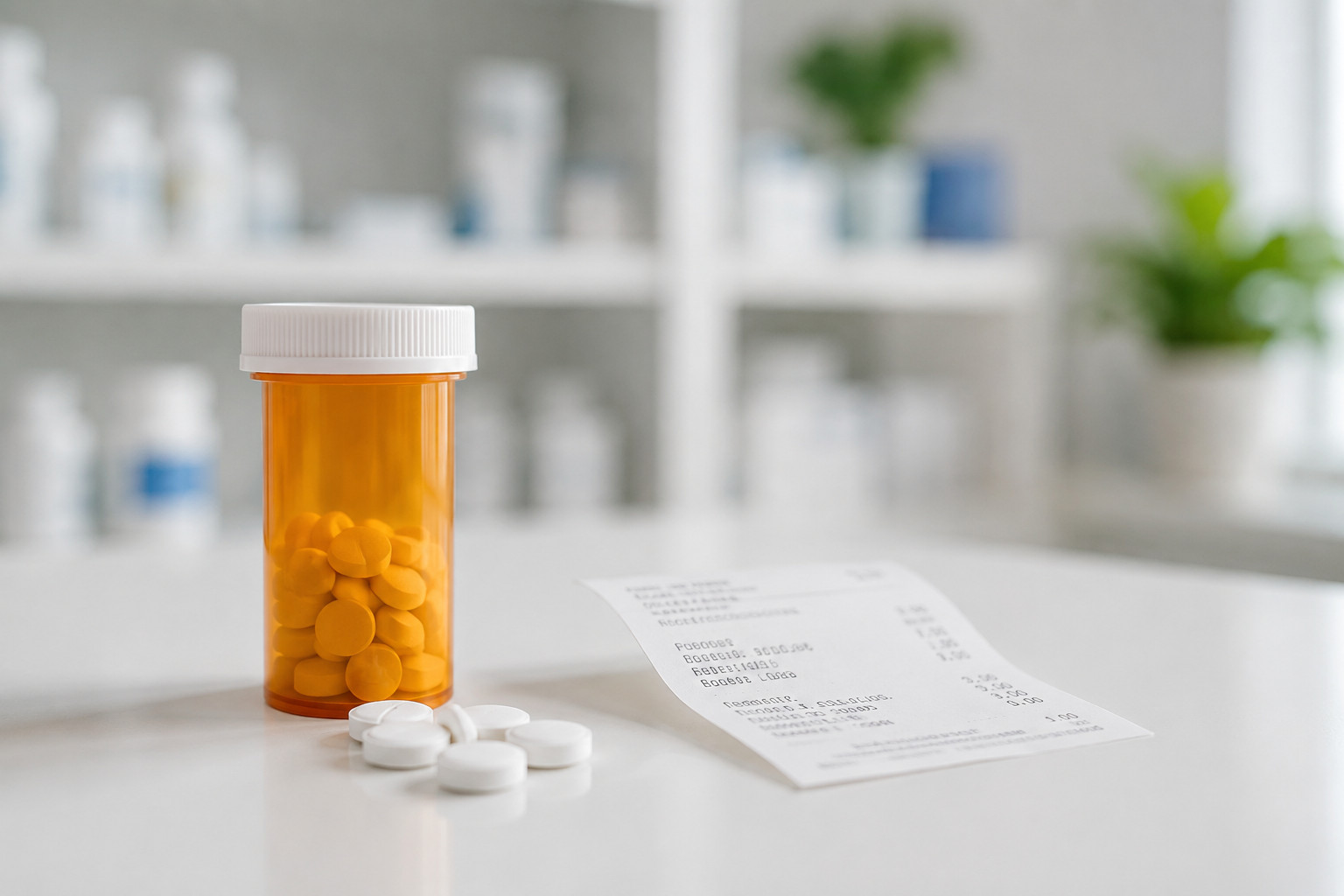
Trazodone is a widely prescribed antidepressant, but many people in the United States also encounter it when discussing sleep problems, anxiety symptoms, or long-term mental health treatment plans. For uninsured patients, the practical question is often simple: how much does trazodone cost without insurance?
In the U.S., generic trazodone is usually one of the lower-cost prescription medications. Based on publicly available pharmacy pricing data, a typical uninsured cash price for 30 tablets often falls around $7–$35, depending on dose, pharmacy, location, and whether a discount card is used. Some coupon prices may be lower, while standard retail pricing can be higher.
According to GoodRx’s trazodone price page, trazodone is available as a generic medication, with coupon prices listed as low as a few dollars for common prescriptions. Drugs.com’s trazodone price guide also lists discounted cash-price examples for different tablet strengths, including 50 mg, 100 mg, 150 mg, and 300 mg.
Prices are estimates based on publicly available pharmacy data and may vary. The price at the counter can change because pharmacies use different purchasing contracts, dispensing fees, discount networks, and local pricing policies.
Quick Answer: Trazodone Cost Without Insurance
For most uninsured patients in the USA, generic trazodone commonly costs about $7–$35 for a 30-day supply when using public discount pricing. Without a coupon or savings program, the price may be higher at some retail pharmacies.
Brand-name trazodone is not the usual cash-pay option today. Older brand names such as Desyrel are historically associated with trazodone, but most patients now receive generic trazodone hydrochloride. In practical pricing terms, this means uninsured patients are usually comparing generic-to-generic pharmacy prices, not brand versus generic shelf prices.
In clinical and pharmacy settings, we often observe that two patients with the same prescription can receive very different quotes simply because one pharmacy applies a discount card automatically while another bills the full retail cash price.
Trazodone Price Breakdown Table
| Type | Estimated Price Range Without Insurance | Notes |
|---|---|---|
| Brand | Often unavailable or not routinely priced | Older branded versions are generally not the standard U.S. retail option |
| Generic trazodone | $7–$35 for many 30-tablet prescriptions | Usually the most affordable option |
| Online pharmacy / mail-order pricing | $10–$45, depending on platform and quantity | May require valid prescription and may include shipping rules |
| Discount-card price | About $4–$15 in some listings | Price depends on pharmacy participation and coupon network |
| Higher-strength or larger-quantity fills | $10–$135+ depending on strength and quantity | 90-day fills may lower per-tablet cost but raise the total checkout price |
These figures should be treated as a planning range, not a guaranteed quote. The most reliable way to confirm the current cost is to ask the pharmacy to price the prescription as “cash pay” and then compare that with a coupon or discount-card quote.
Price Comparison by Pharmacy Type
Trazodone pricing can look surprisingly inconsistent across U.S. pharmacies. A large chain pharmacy may quote one amount, a supermarket pharmacy another, and an independent pharmacy a third. This does not always mean one pharmacy is “overcharging.” It often reflects different contracts, inventory costs, dispensing fees, and discount-network participation.
Retail pharmacies are convenient and often have trazodone in stock. Their posted cash price may be moderate, but it is worth asking whether they can apply a prescription discount program.
Online pharmacies and mail-order services may offer competitive pricing, especially for 90-day prescriptions. However, trazodone is still a prescription medication, so legitimate pharmacies should require a valid prescription from a licensed clinician.
Discount programs can make a major difference for uninsured patients. Some discount cards reduce the cash price by comparing network rates across participating pharmacies. Patients looking for broader strategies may find it useful to review prescription discount programs before filling a recurring medication.
One real-world point matters: the lowest listed price online is not always the lowest final price at checkout. Pharmacy participation, ZIP code, tablet strength, and coupon terms can all affect the amount paid.
Generic vs Brand Price Difference
For trazodone, the generic option dominates everyday U.S. pricing. Generic trazodone hydrochloride is typically far less expensive than what a branded antidepressant might cost without insurance.
Because branded trazodone is not commonly used as the standard retail choice today, a precise brand-versus-generic percentage difference is difficult to calculate in a meaningful way. In practice, however, the savings from using generic trazodone instead of a branded antidepressant alternative can be substantial. Generic trazodone may cost under $20 for many common fills, while many branded psychiatric medications can cost hundreds of dollars per month without insurance.
The U.S. Food and Drug Administration’s labeling for trazodone hydrochloride tablets lists common strengths such as 50 mg, 100 mg, 150 mg, and 300 mg in prescription tablet form. This matters for cost because pharmacies often price prescriptions based on strength, quantity, manufacturer, and packaging availability. A patient taking one 100 mg tablet nightly may not pay the same as a patient taking two 50 mg tablets nightly, even when the total daily dose is similar.
Dosage-Based Cost Differences
Trazodone cost depends heavily on the prescribed strength and the number of tablets dispensed.
A 30-tablet prescription is usually the simplest comparison point. For example, a patient prescribed 50 mg once nightly may compare prices for 30 tablets. Someone prescribed 100 mg or 150 mg may see a slightly different price because the pharmacy is dispensing a different product strength.
A 90-tablet prescription often costs more upfront but may reduce the cost per tablet. For patients taking trazodone long term, prescribers sometimes write 90-day prescriptions when clinically appropriate. This can reduce repeat pharmacy visits and may lower the monthly average cost.
However, larger quantities are not always better. If the dose is still being adjusted, a 90-day fill may lead to waste if the prescriber changes the regimen. Patients should ask the prescribing clinician whether the current dose is stable before choosing a larger fill.
Common cost patterns include:
| Prescription Example | Typical Cost Pattern | Practical Note |
|---|---|---|
| 50 mg, 30 tablets | Often among the lowest-cost fills | Common starting or low-dose quantity |
| 100 mg, 30 tablets | Often modestly priced | May be cheaper than taking two 50 mg tablets |
| 150 mg, 30 tablets | Usually still generic-priced | Price depends on manufacturer and pharmacy |
| 300 mg, larger quantity | Can be much higher | Less common and may show wider price variation |
| 90-day supply | Higher total, lower monthly average possible | Best when dose is stable |
The key question is not only “What is the tablet price?” but “What is the total monthly cost for the way this prescription is written?”
Why Is Trazodone Expensive in the USA?
Trazodone is not usually considered expensive compared with many newer medications. Still, some uninsured patients receive unexpectedly high quotes. Why does this happen?
First, the U.S. prescription market has multiple layers of pricing. A pharmacy’s cash price may differ from its discount-card price, acquisition cost, insurance-negotiated price, and Medicare plan price. The same medication can therefore have several “prices” at the same counter.
Second, pharmacy location matters. Urban areas may have more pharmacy competition, which can push discount prices lower. Rural areas may have fewer nearby pharmacies, making comparison shopping harder. A patient in a large city may be able to compare five pharmacies within a few miles, while a rural patient may have only one or two practical options.
Third, dosage and stock availability can change the final price. If one manufacturer’s trazodone tablets are temporarily unavailable, a pharmacy may dispense another manufacturer’s version at a different acquisition cost.
Fourth, U.S. healthcare billing is fragmented. Unlike countries with centralized medicine pricing systems, uninsured U.S. patients often face a market-based retail price unless they actively use coupons, discount programs, community clinics, or pharmacy-shopping tools.
A uniquely American issue is that the “cash price” may not be the best price. In practice, uninsured patients often save money by asking the pharmacy to compare the regular cash price with available discount-card pricing before paying.
How to Reduce the Cost Without Insurance
The first cost-saving step is usually to request generic trazodone. For this medication, generic prescribing is already the norm, but it is still worth confirming that the prescription is being filled as trazodone hydrochloride rather than a more expensive alternative.
Second, compare pharmacies before filling. A few phone calls can matter. Ask each pharmacy for the price of the exact strength and quantity on the prescription. Be specific: “What is the cash price for trazodone 50 mg, 30 tablets?” Then ask whether a discount card changes the price.
Third, consider a 90-day supply if the dose is stable. A larger fill can reduce the monthly average cost, but it is not ideal when treatment is new or the prescriber is still adjusting the dose.
Fourth, ask the prescriber whether the tablet strength can be optimized. Sometimes one tablet strength is less expensive than another, or one 100 mg tablet may cost less than two 50 mg tablets. Patients should not change dosing on their own, but they can ask whether the prescription can be written in the most cost-efficient format.
Fifth, check community health centers, low-cost clinics, and local pharmacy programs. Some clinics serving uninsured patients can help locate affordable pharmacies or connect patients with local medication-assistance resources.
Finally, avoid suspicious online sellers. A legitimate online pharmacy should require a valid prescription. If a website offers prescription trazodone without any prescription review, that is a warning sign.
Safety and Prescription Considerations
Trazodone is a prescription medication, not an over-the-counter sleep aid. The FDA prescribing information for trazodone hydrochloride states that trazodone hydrochloride tablets are indicated for the treatment of major depressive disorder in adults and lists warnings and precautions that clinicians consider before prescribing.
Cost should never be the only factor in treatment decisions. Patients should discuss side effects, drug interactions, alcohol use, pregnancy or breastfeeding, heart rhythm history, and other medical conditions with a licensed healthcare professional.
From a practical standpoint, patients sometimes ask whether they can split tablets to save money. Some trazodone tablets are scored, but tablet splitting should only be done if the prescriber or pharmacist confirms it is appropriate for the specific product and dose.
Price Comparison Across Countries
Trazodone pricing looks different outside the United States because other countries use different medicine-pricing systems.
In the United Kingdom, trazodone is available by prescription, and patient cost is shaped by NHS prescription-charge rules rather than open U.S.-style cash pricing. The NHS trazodone information page notes that trazodone is only available on prescription.
In Australia, access and price may depend on whether the medicine is supplied through standard commercial channels, private prescription arrangements, or compounding pathways. Australian pricing does not mirror U.S. discount-card pricing.
In the United States, uninsured patients are more exposed to retail pharmacy variation. That is why U.S. patients may see one pharmacy quote under $10 with a discount card while another quotes several times more for the same drug.
For SEO planning, trazodone pricing can also be compared with similar antidepressants such as mirtazapine, amitriptyline, fluoxetine, sertraline, and doxepin. These alternatives are not interchangeable for every patient, but cost comparisons may be useful when a clinician is choosing among clinically appropriate options.
Is Trazodone Usually Affordable Without Insurance?
For many U.S. patients, yes. Trazodone is often one of the more affordable generic prescription medications when discount pricing is used. The most common out-of-pocket range for a basic 30-day supply is often in the low double digits or below.
The main risk is paying the first price quoted without comparison. A patient may spend more than necessary simply because they did not ask whether a coupon, alternate pharmacy, or 90-day supply would reduce the cost.
A practical approach is to compare three numbers before filling:
- The pharmacy’s regular cash price
- The pharmacy’s discount-card price
- The price at one or two competing pharmacies
That small comparison can make trazodone significantly more manageable for uninsured patients.
Bottom Line
Without insurance in the United States, trazodone commonly costs around $7–$35 for many 30-tablet generic prescriptions, though prices can fall lower with coupons or rise higher depending on strength, quantity, and pharmacy.
Generic trazodone is usually the most affordable route. Patients can often reduce costs by comparing pharmacies, using discount programs, asking about 90-day fills, and confirming that the prescription is written in a cost-efficient strength.
This article is for informational purposes only and does not replace professional medical or financial advice.